A random decision to fly down to Cairns on a three week quest to find Southern Cassowary in Northern Queensland.
Having enjoyed two months of Asian hospitality, warm sunshine and fine food I decided it was time for a bit of a change, so I made the decision to head south to Cairns, Australia for three weeks for a complete change of scenery and culture. It is the rainy season in Northern Queensland so the temperatures are a little cooler and light rain showers are frequent.
I have arrived here on a quest, to find a Cassowary, the world’s third largest bird and the most dangerous avian species on the planet, responsible for numerous human fatalities.
The Southern Cassowary is a flightless bird that stands around five feet tall when full grown, it can run up to 50Km an hour and has an extremely long middle claw which it uses to great effect, kicking out when alarmed. Almost the entire world population exists around the tip of Northern Queensland with high concentrations in the Cairns area.
Australia is famed for its quirky wildlife and fauna so most of my posts will probably revolve around the natural world as Australian history and culture has evolved fairly recently and the indigenous people are not very approachable. Hopefully I will find something of interest for all readers.
The wildlife here can be incredibly tame making it easier to obtain good photographs. (For a complete list if birds seen please see the Australia Birdlist Plodcast)
Below are some of the more unusual looking birdlife that can be found wandering through the public parks.
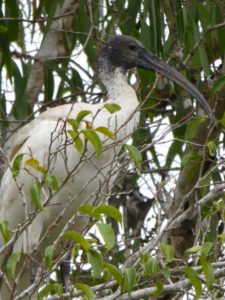
The White Ibis is common in Australia, in some areas it can be a pest, showing no fear of humans and stealing food from picnic tables.
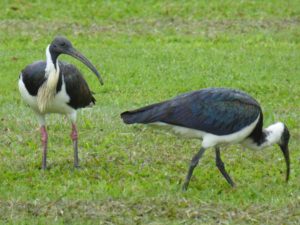 Straw-necked Ibis
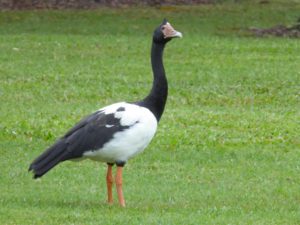
Magpie Goose
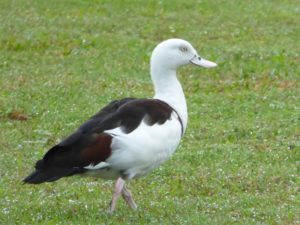
Radjah Duck
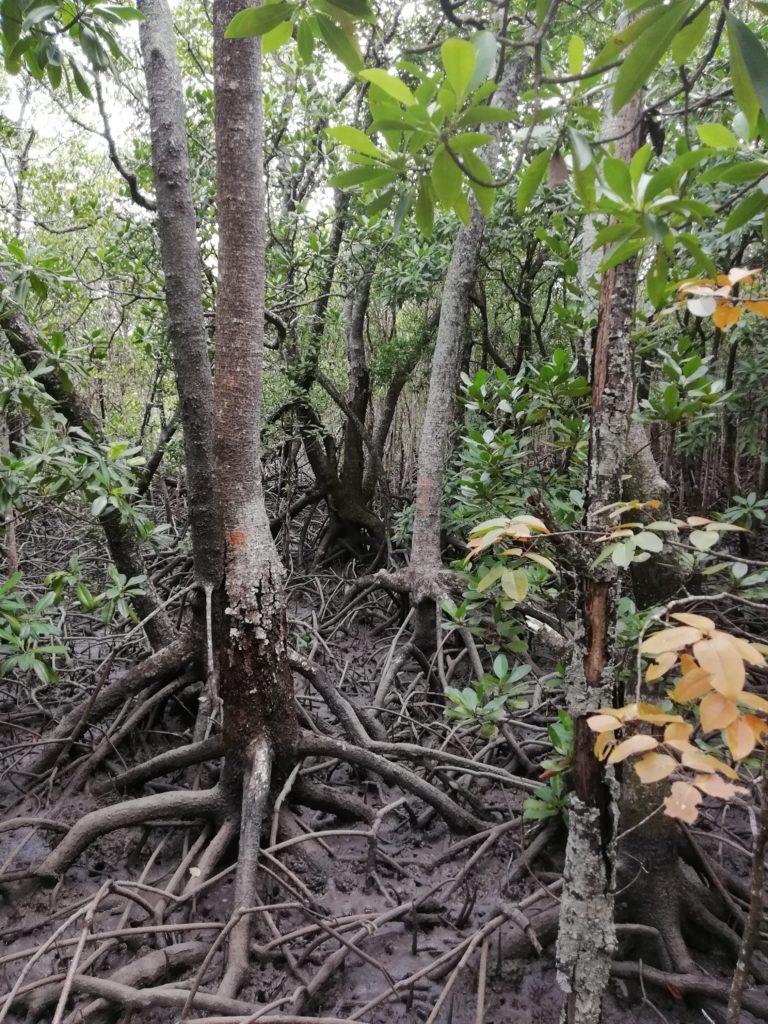
The mangrove swamps and riverside in the centre of Cairns are all popular with dog walkers and families, they are good places to seek out other wildlife although it is not advisable to wander to far off the path!
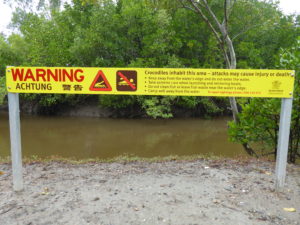
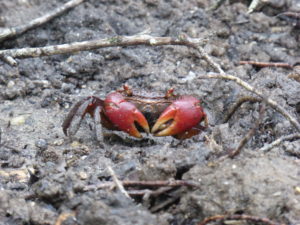
The Australians are exceptionally good at creating and preserving accessible national parks. Within these areas it is possible to observe the most beautiful and bizarre of the natural world. To the North West of the city are the Botanical Garderns and Mount Whitfield National Park, I spent many a happy hour exploring this area where birds were easily approached and marvelling at all the rainforest had to offer. Watching screeching parrots whizz above the trees, hearing the strange squawk of Friar Birds, watching multicoloured crabs emerge and then scuttle back to their holes in the mangrove swamps and pondering whether a crocodile is suddenly going to emerge from the river ahead of you, its easy to imagine the wonder and trepidation of early explorers as they took there first steps on the shores of Australia. To me, Oz is paradise on earth.
Parasitic ferns are common in the wet, tropical forests of Queensland and often clothe a host tree.
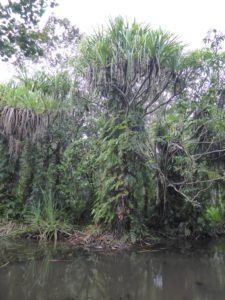
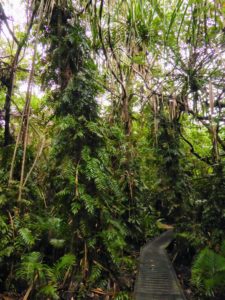
Another well known, native Australian parasitic plant, is Mistletoe. As with other plants which bear fruit, it is highly reliable on birds and animals which eat the fruits to carry and spread its seeds. The Mistletoe Bird specialises in eating and distributing its seeds.
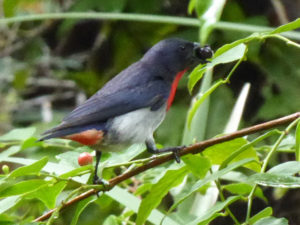 Mistletoe Bird (with a Berry)
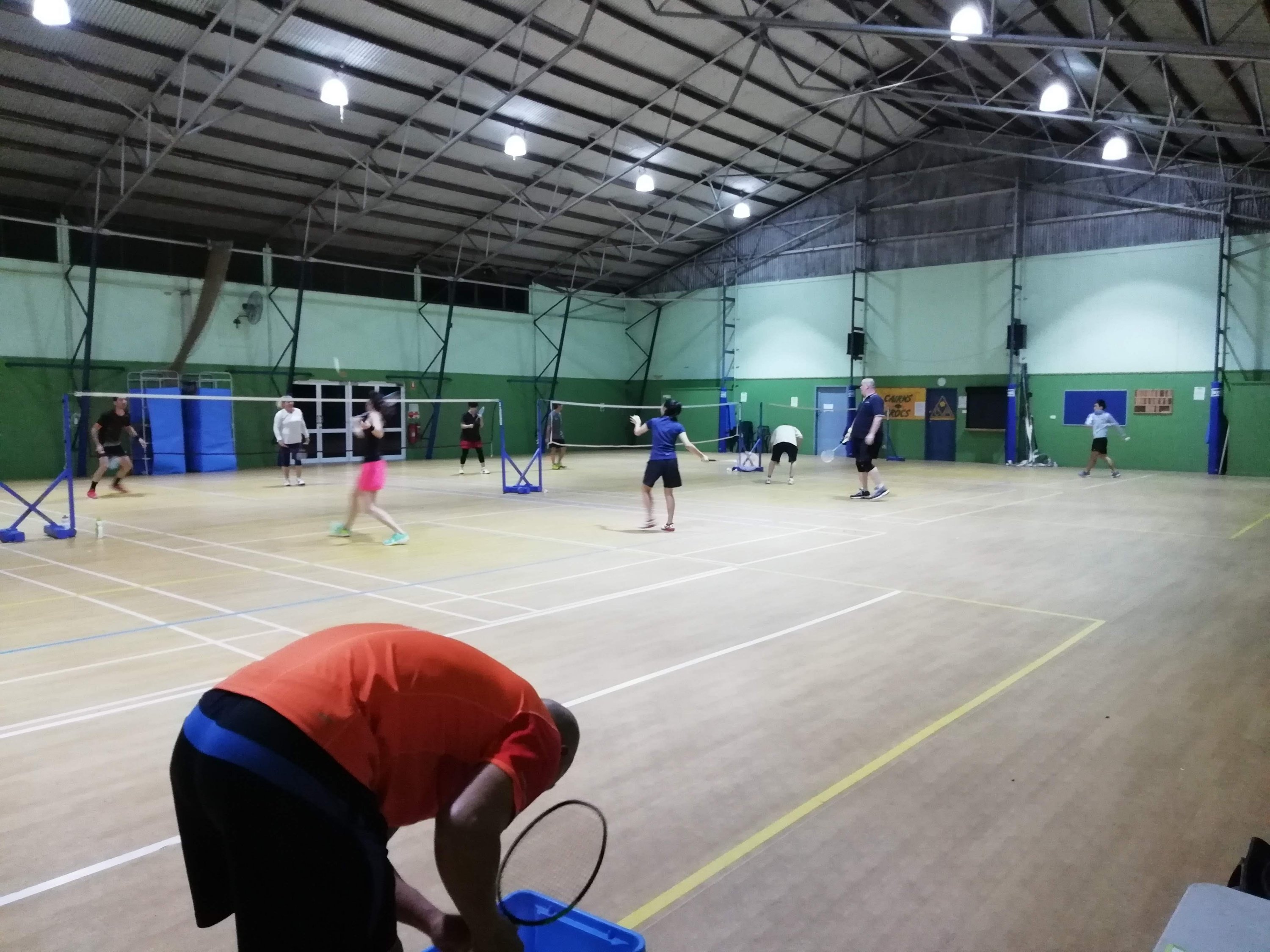
Birdwatching is not my only passion in life, I’m quite handy when it comes to weilding a badminton racquet too, so when I was passing a Cairns sports club and happened to notice it was badminton night I walked in and asked if I could join the club for the evening…knowing how competitive the Ozzies are at sport, I let them win a couple of games.
Cairns Esplanade is a fantastic place to while away a few hours, at high tide huge number of birds can be found feeding on the mudflat at very close range.
Boats leave from the south quay daily taking day trippers out to the Barrier Reef.
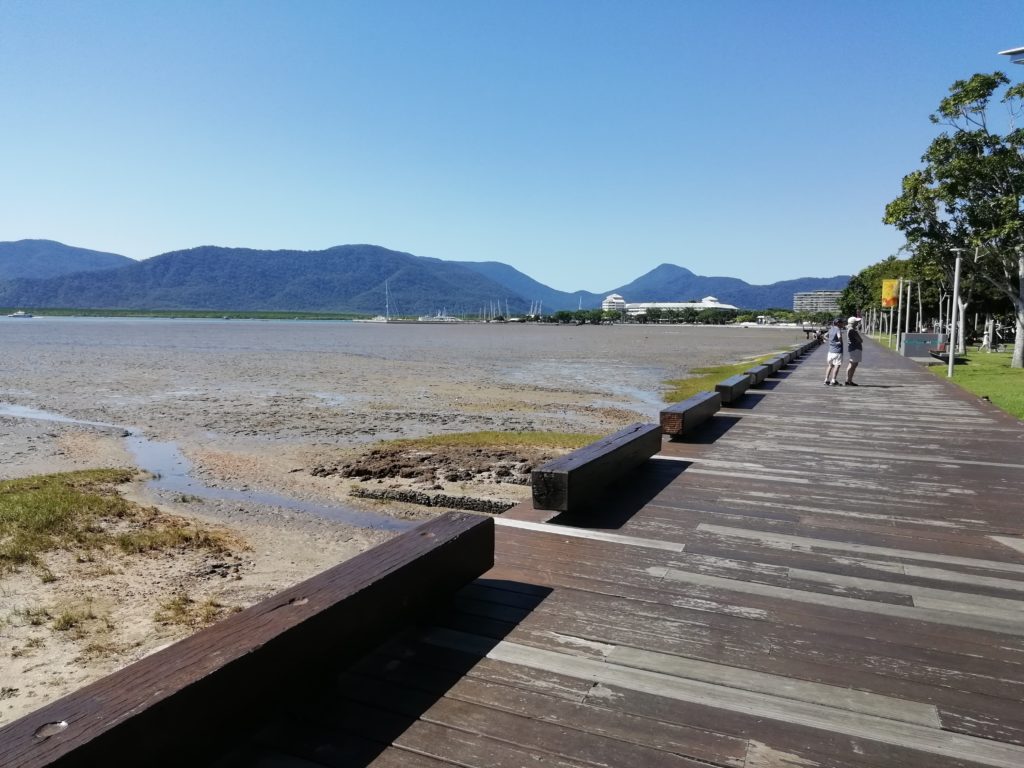
After a few days in Cairns I hired a car and headed away from the city, my first destination was Mission Beach, an area of beautiful sandy beaches and where Cassowary are still regularly seen. I was booked into a Hostel, situated on the outskirts of Mission Beach, set at the foot of a hill clothed in rainforest, my choice of accommodation couldn’t have been better, on arrival the staff informed me that a female Cassowary regularly wandered through the gardens and I would be extremely unfortunate to go away without seeing her…I didn’t have to wait long, only two hours after I arrived a male with two fully grown immatures walked across the road in front of me. My quest was over before it had begun!
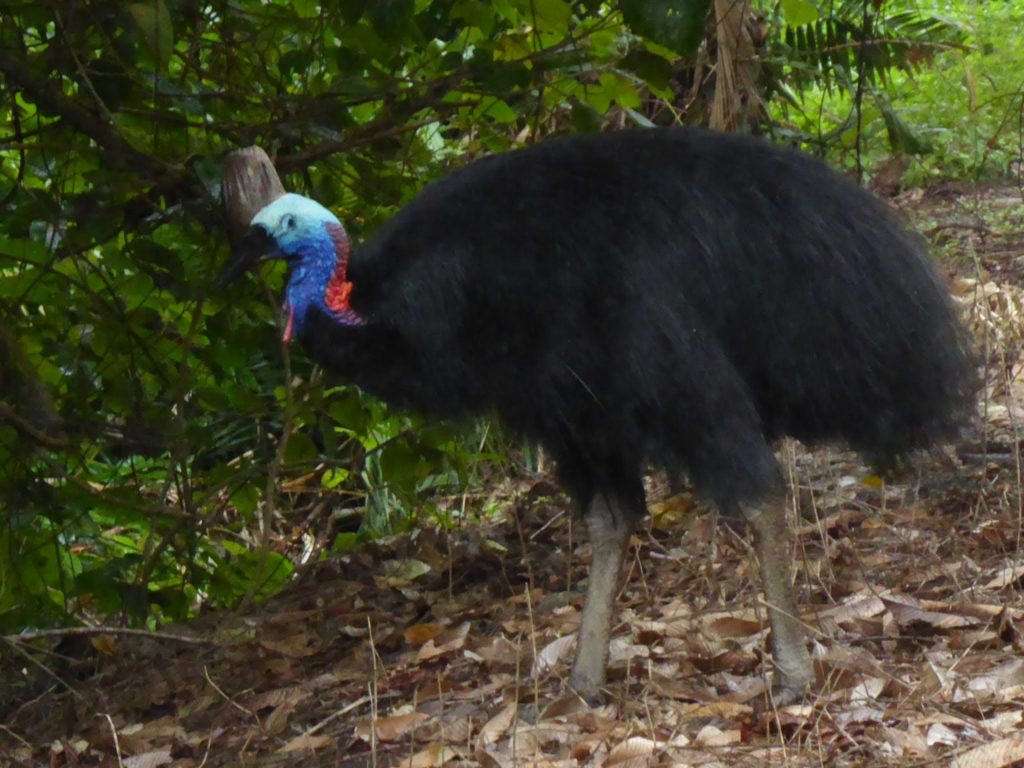
I was blessed with a further nine sightings of Cassowary over the next four days, mainly of birds crossing roads in front of the car and of the female bird feeding in the Hostel garden but an encounter with one in more natural habitat on a walk in the rainforest was particularly special, the only time I truly felt that I saw this spectacular bird in its true element. The saddest moment was watching tourists chasing a young adult along the beach at Etty Bay, the Cassowary’s world is shrinking fast.
With my quest at an end so soon, I had more time to explore the area I was based in…
The Sugar Cane Industry
Growing sugar cane is a major business in Northern Queensland, there is approximately 4,000 km of rail track devoted to the industry throughout the region, transporting millions of tons of sugar to local refineries each year. When the cane is harvested it is transported to these refineries within 12 to 18 hours. After leaving the main highways it is impossible to drive far before coming across a cane rail track crossing the road.
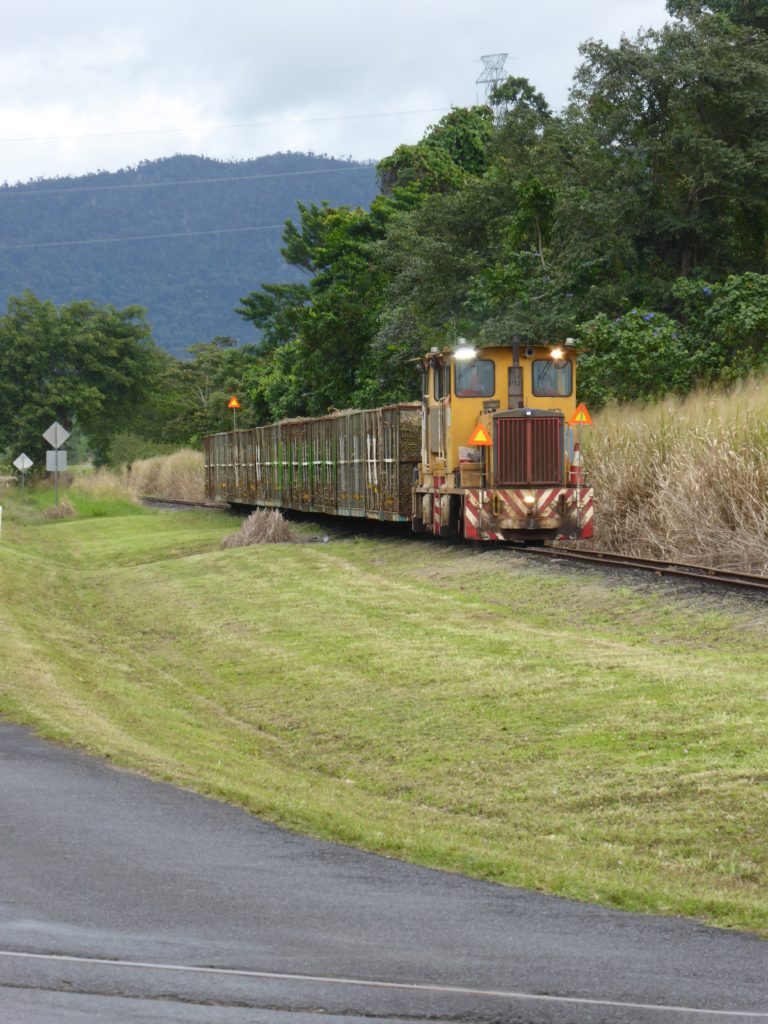
‘Cane Train’ with loaded bins, near Tully. 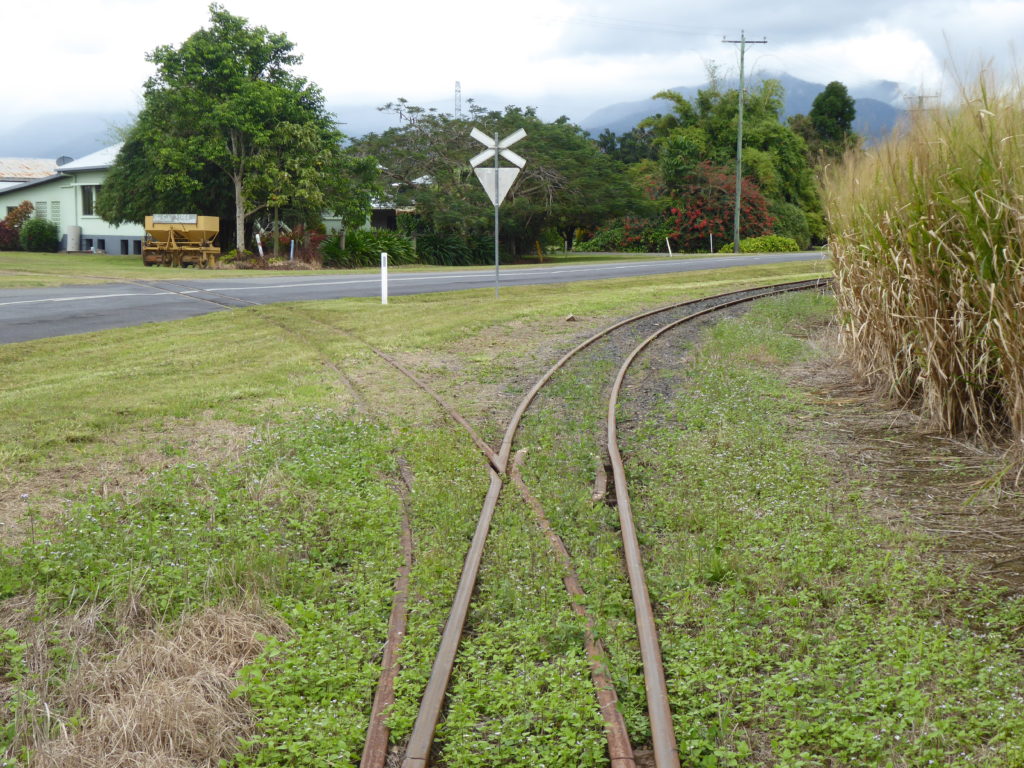
Narrow gauge rail near Tully, Queensland 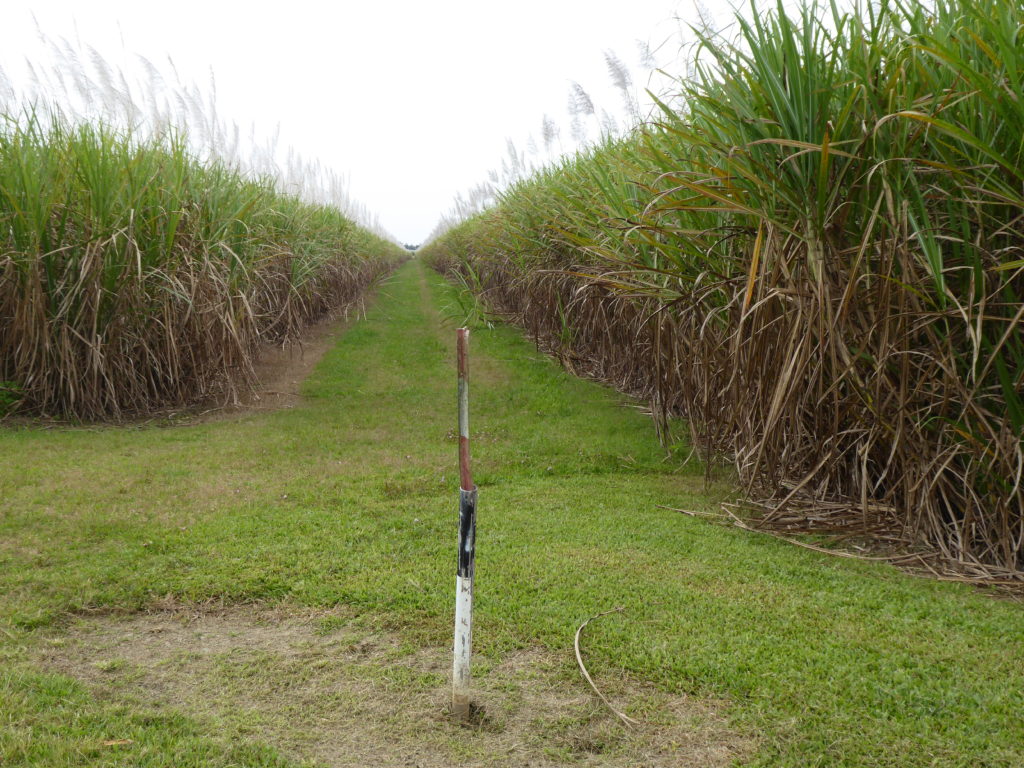
Sugar Cane field 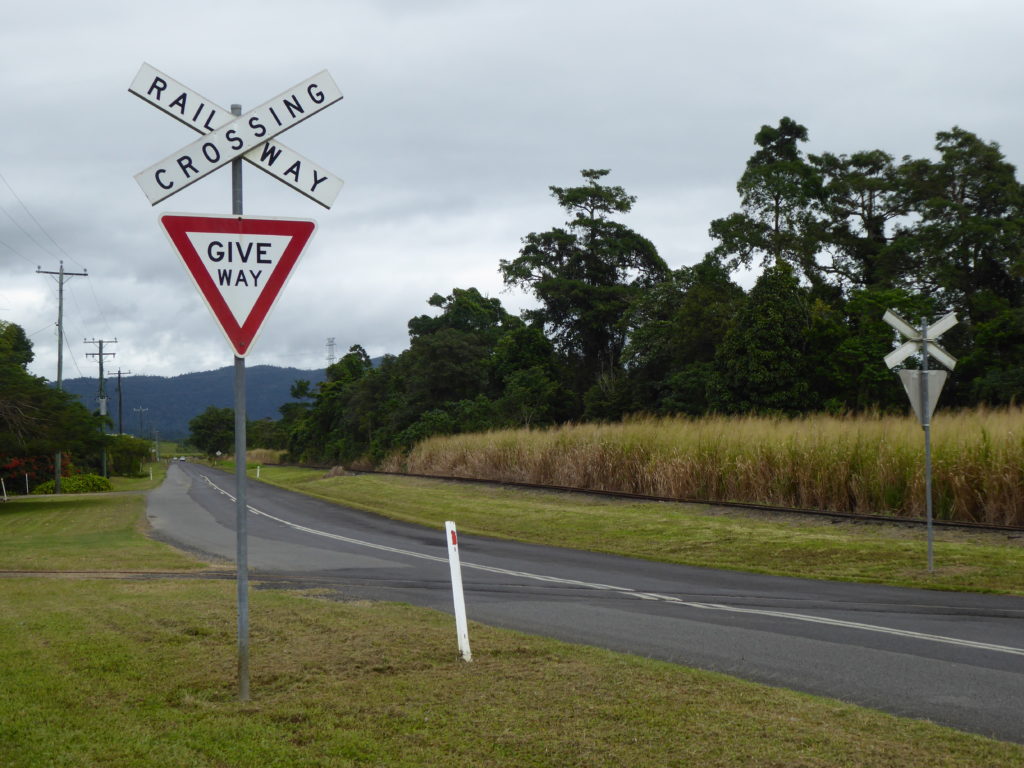
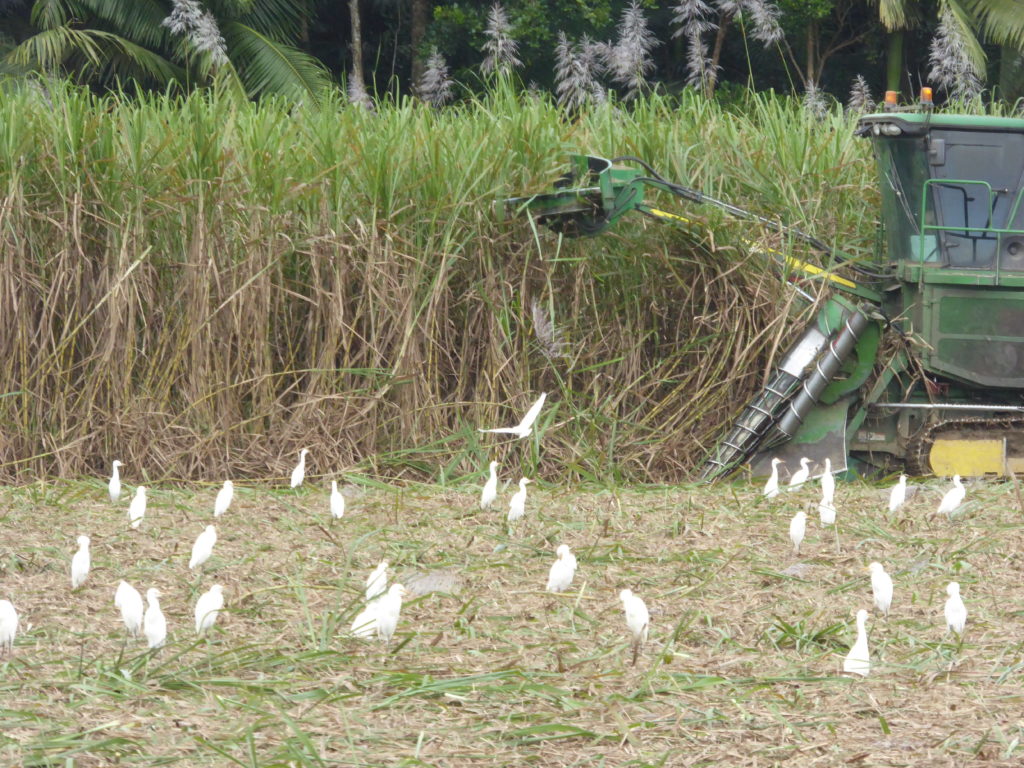
Harvesting the cane 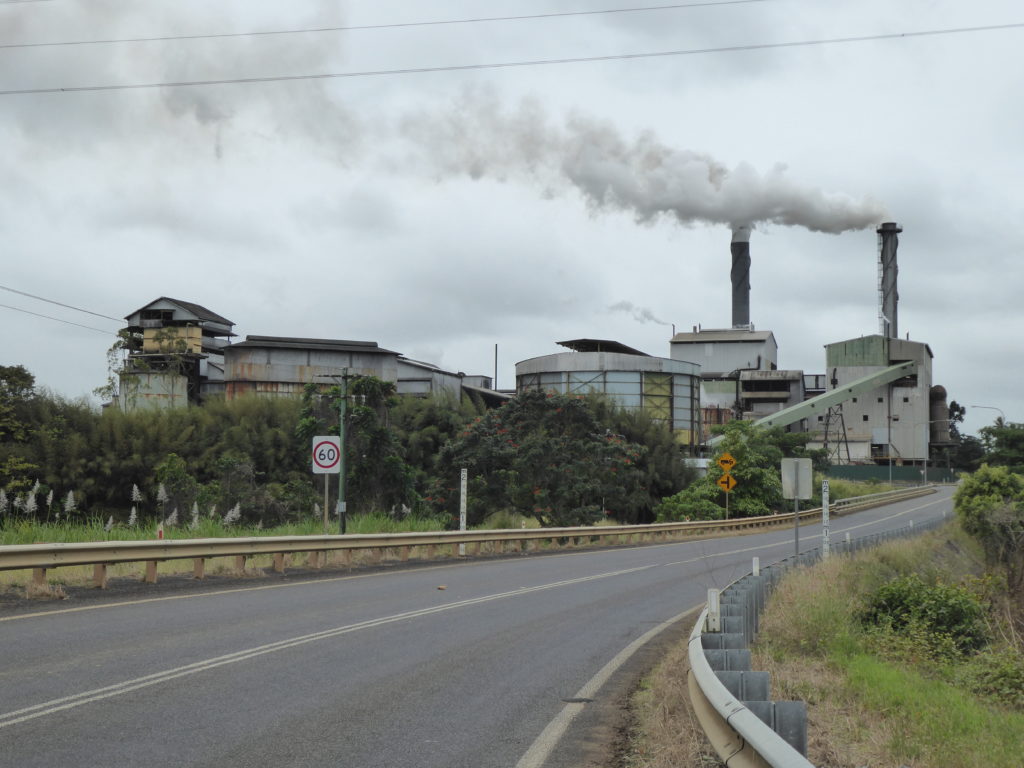
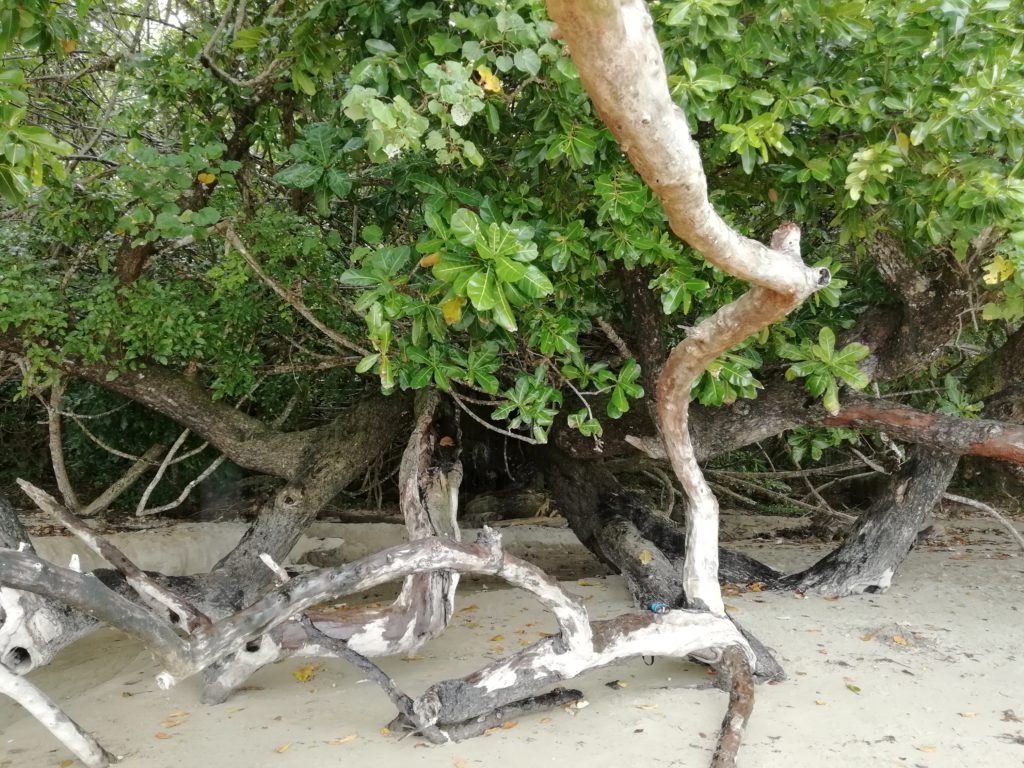
Etty Bay
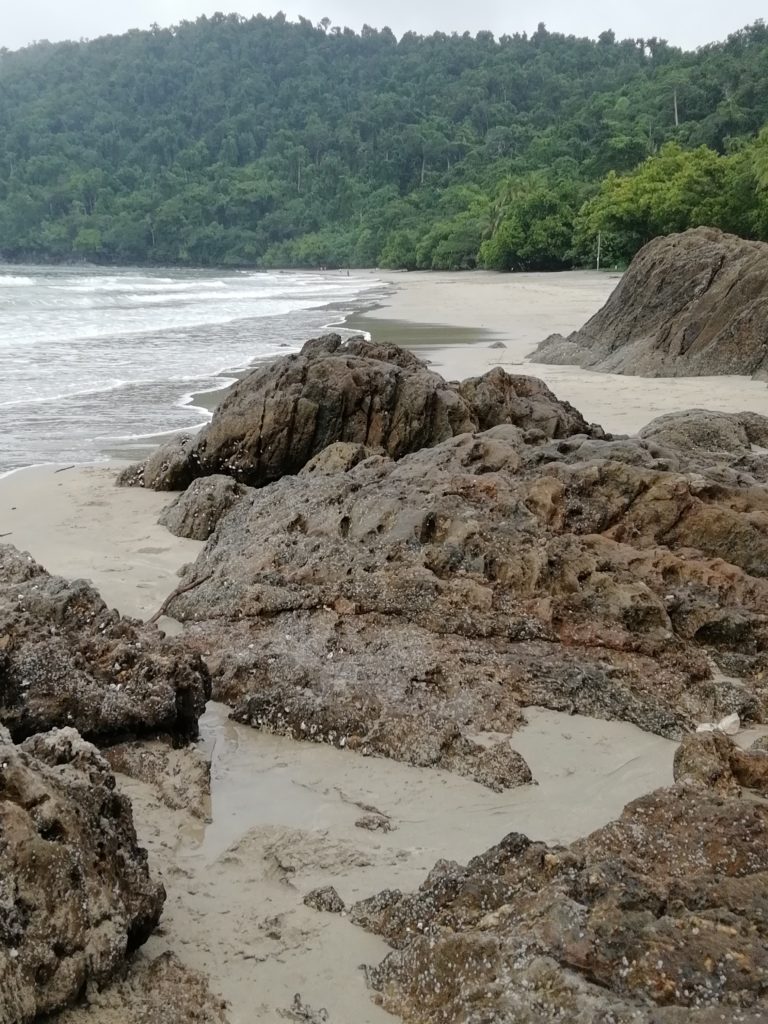
Etty Bay beach 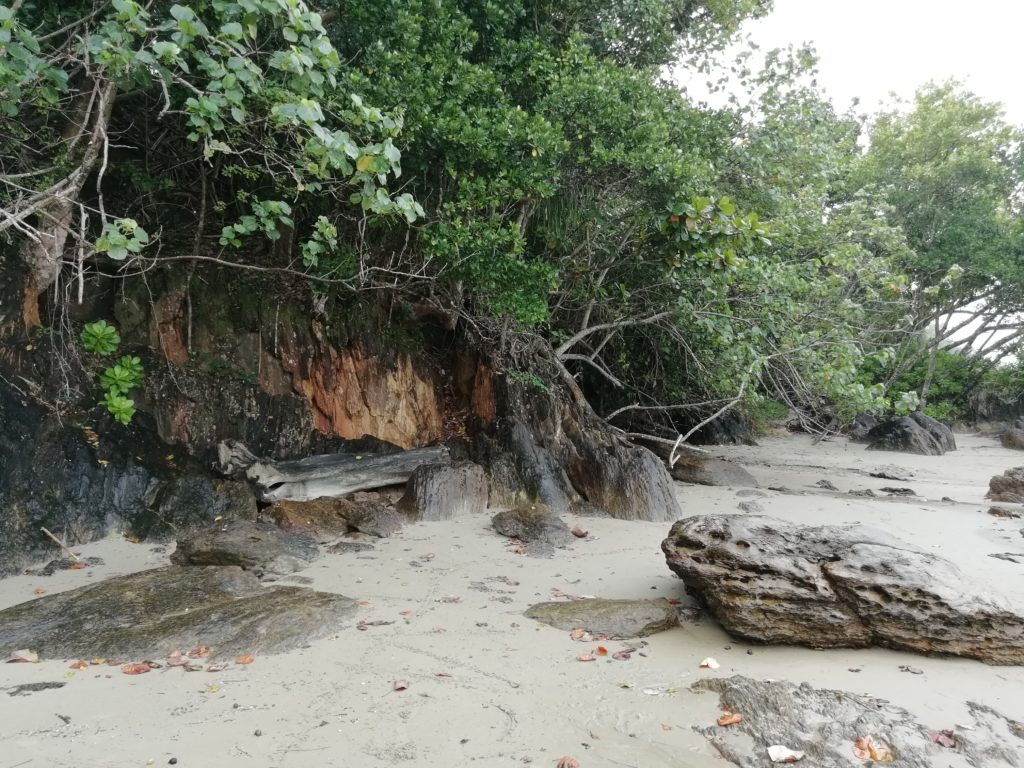
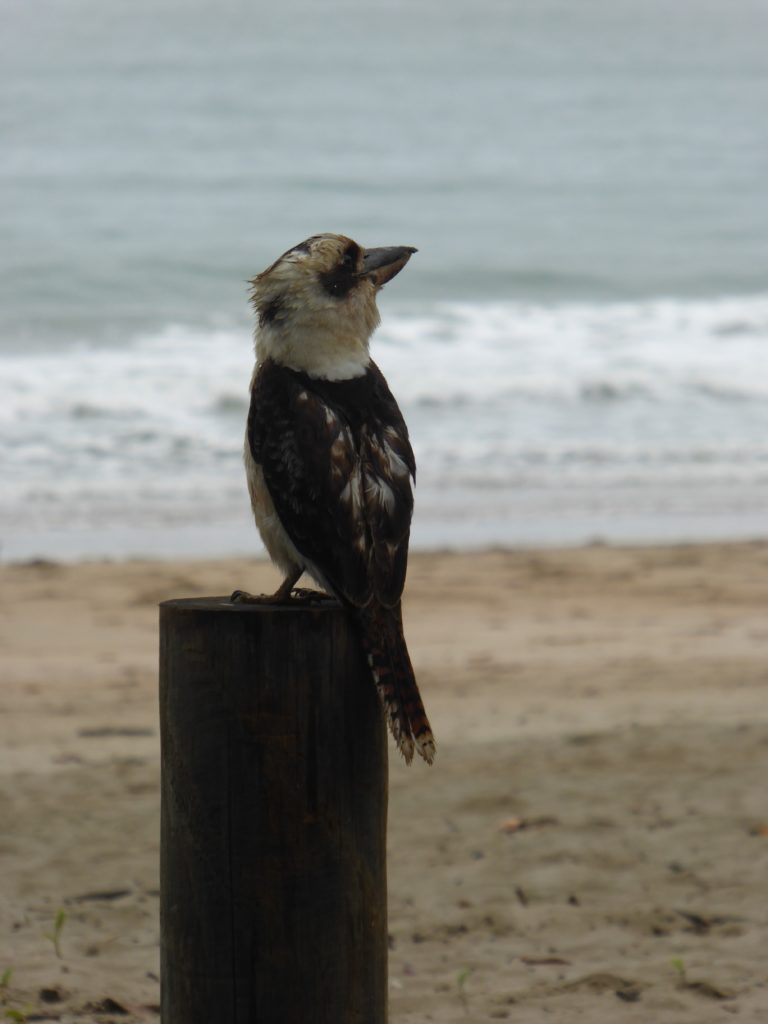
Laughing Kookaburra 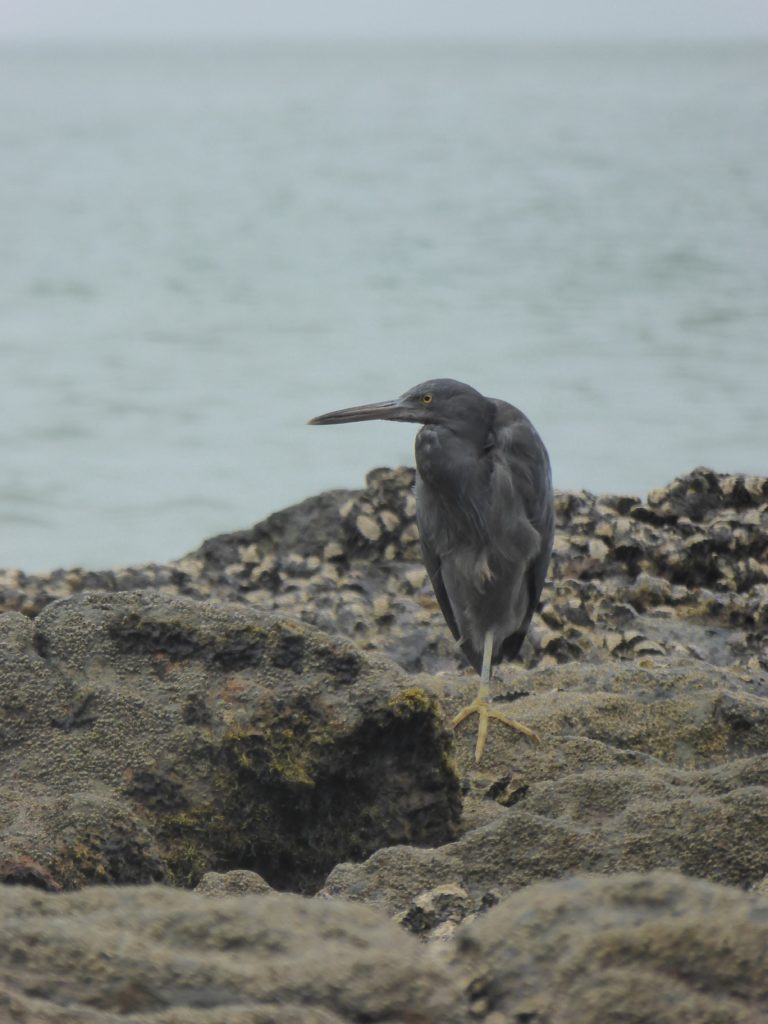
Reef Heron (grey type)
Mount Tyson
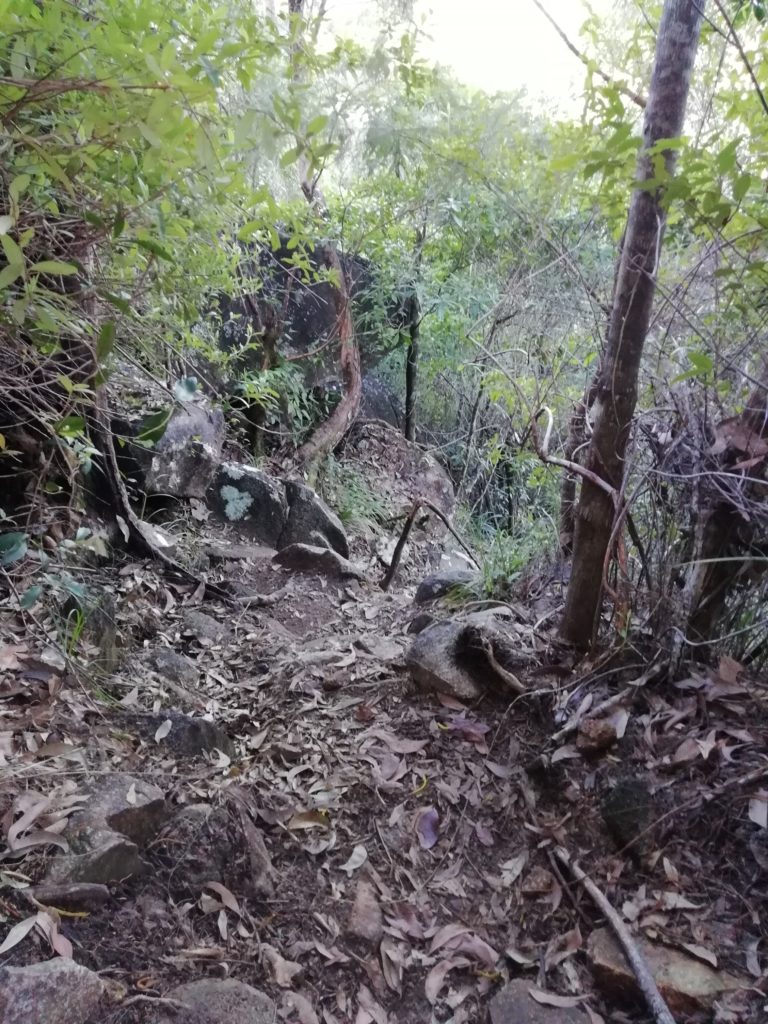
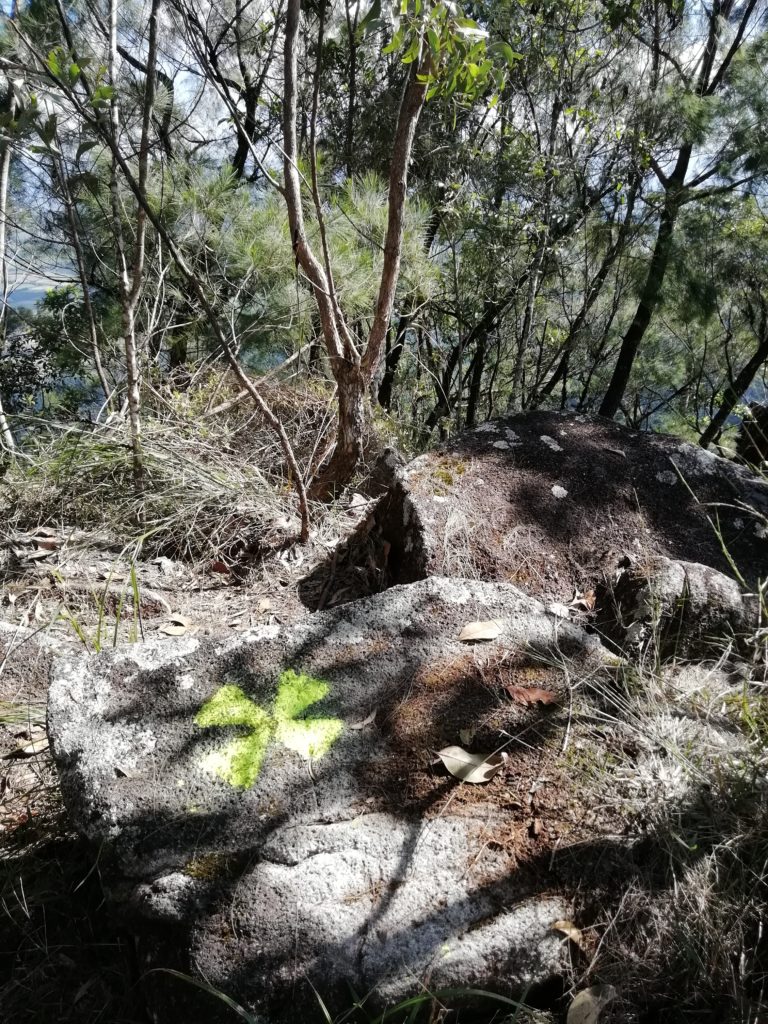
With a name like that who could resist a scramble up this mountain. The paths and ascents were well marked with yellow symbols sprayed onto rocks and trees, I found the terrain fairly hard going in some parts but had a very enjoyable day negotiating the trail up to the summit. The view from the top was a little disappointing if I’m honest but the views over the valley at the midpoint were stunning.
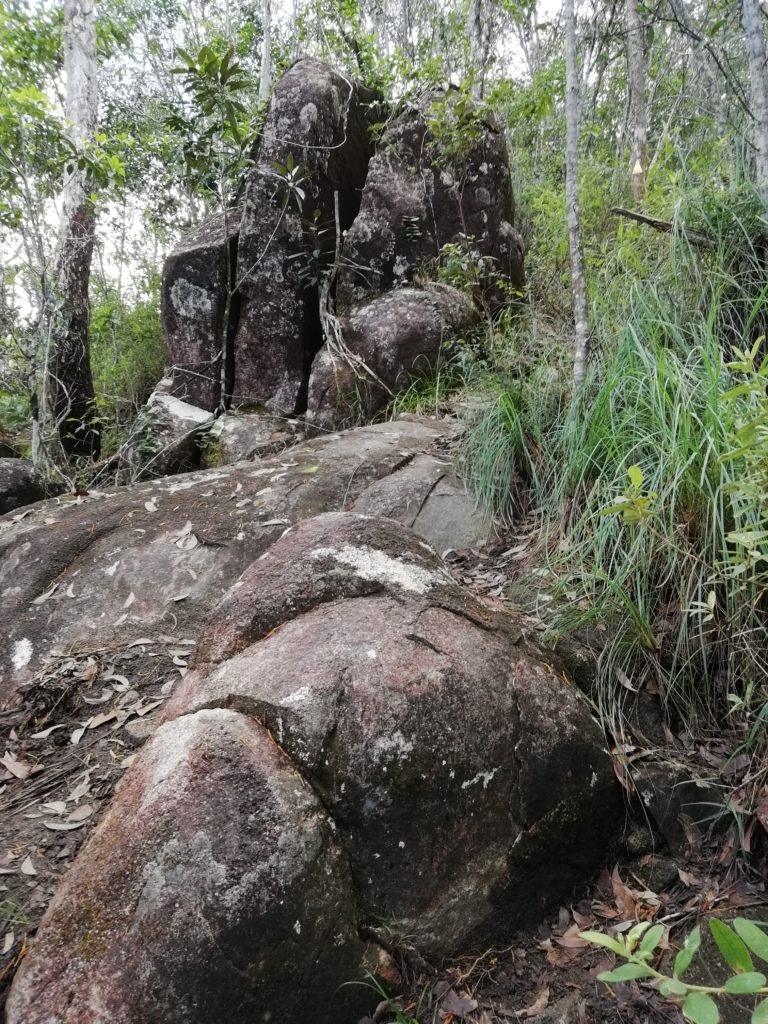
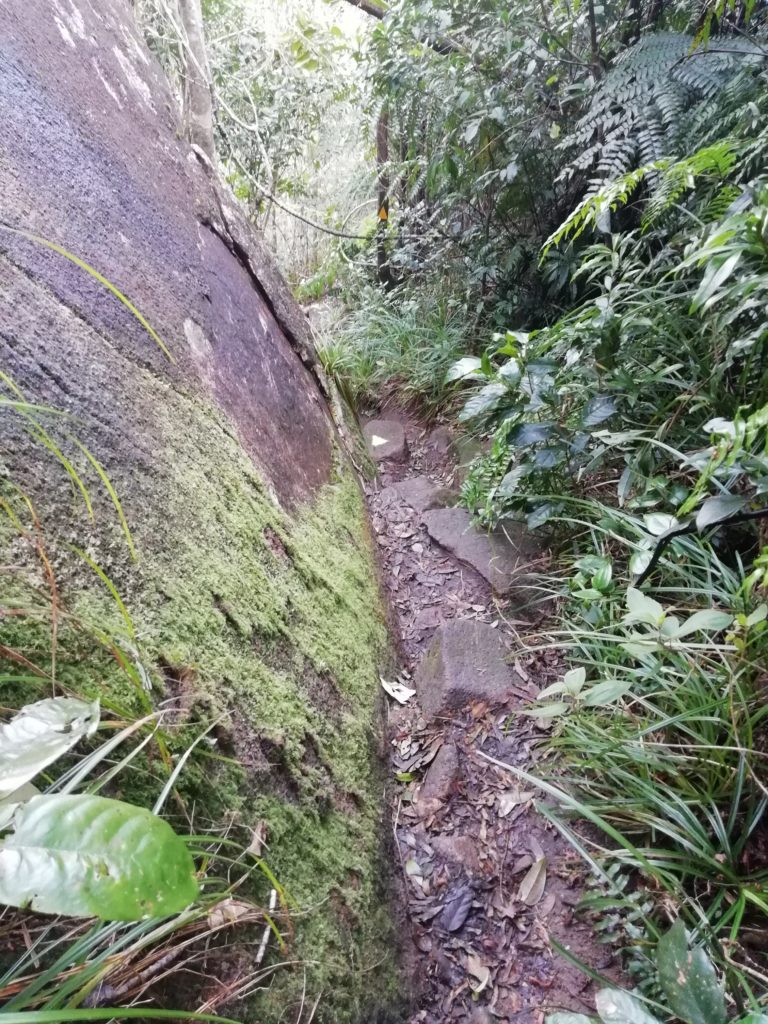
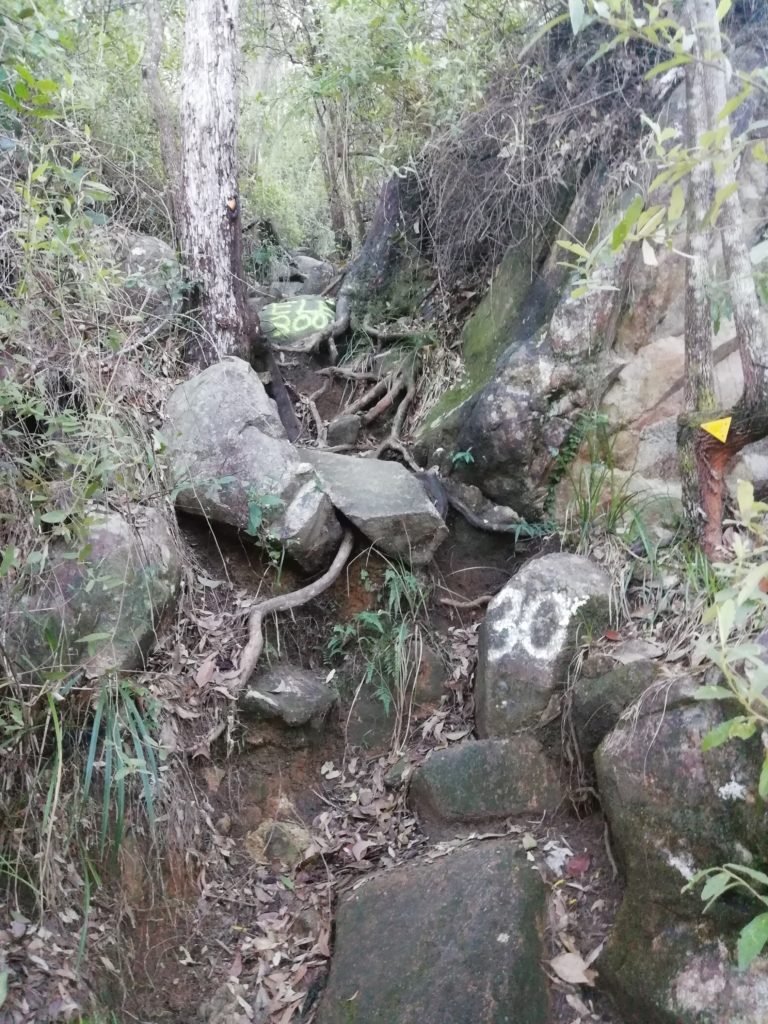
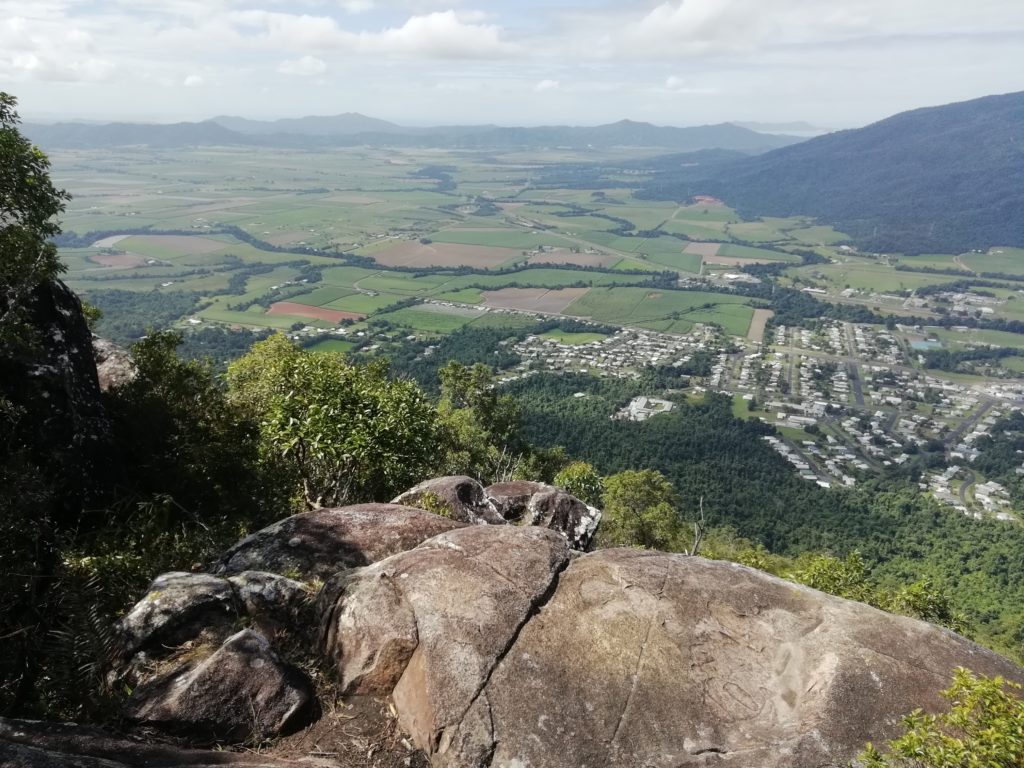
View point Mount Tyson 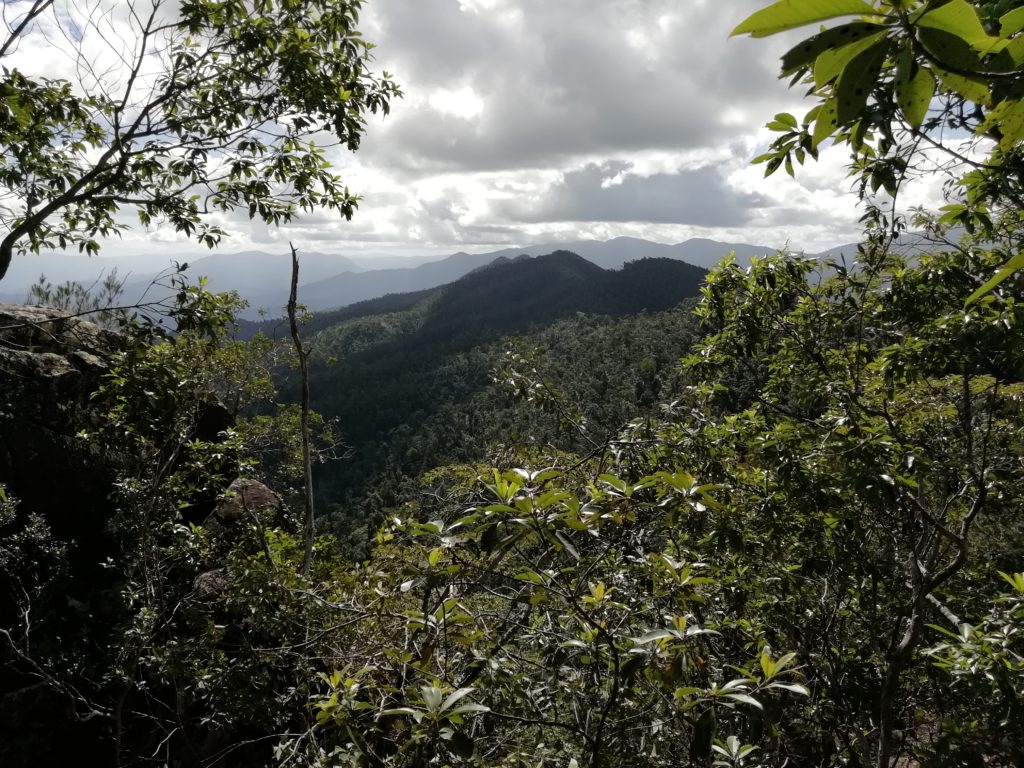
Mount Tyson peak
Yungaburra
With more time on my hands than anticipated, I decided to head up onto the Table Lands, West of Cairns. Here I was hoping to find a more diverse range of wildlife and planned a foray out into the wilder areas of Australia. Hostels are few in this area but I managed to find a place in Yungaburra and headed off with great anticipation of the week ahead.
Driving up onto The Table Lands the landscape changes from the flat expanse of sugar cane fields to that of rolling green hills and of lush farmland and rainforest.
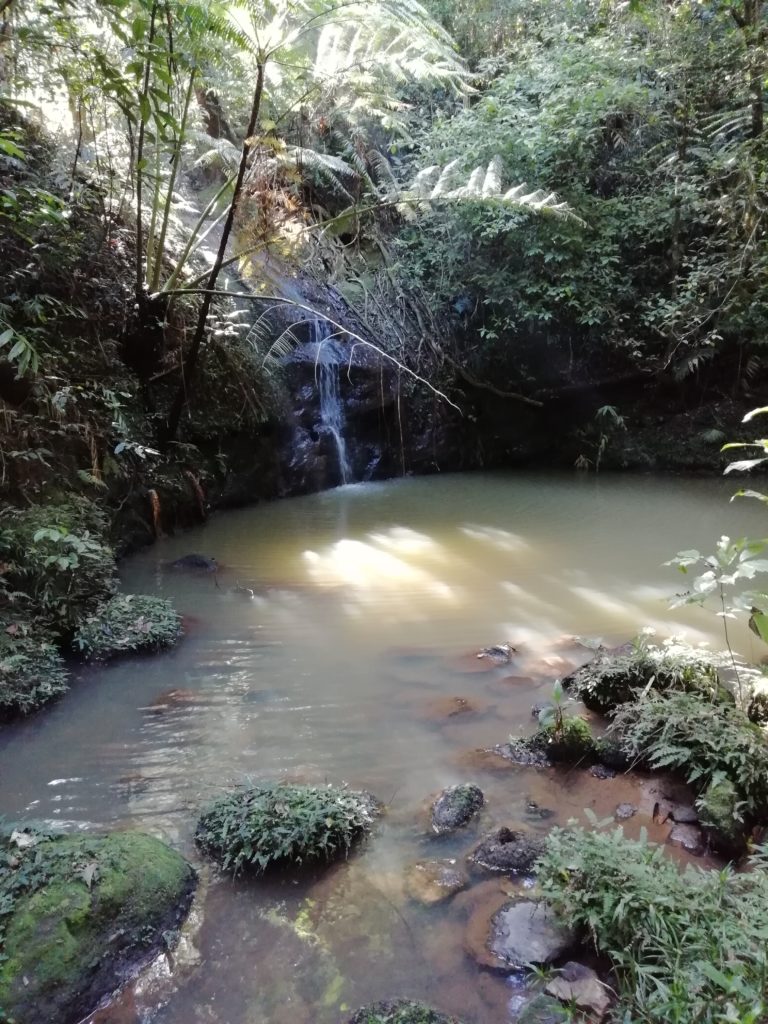
Yungaburra Rainforest 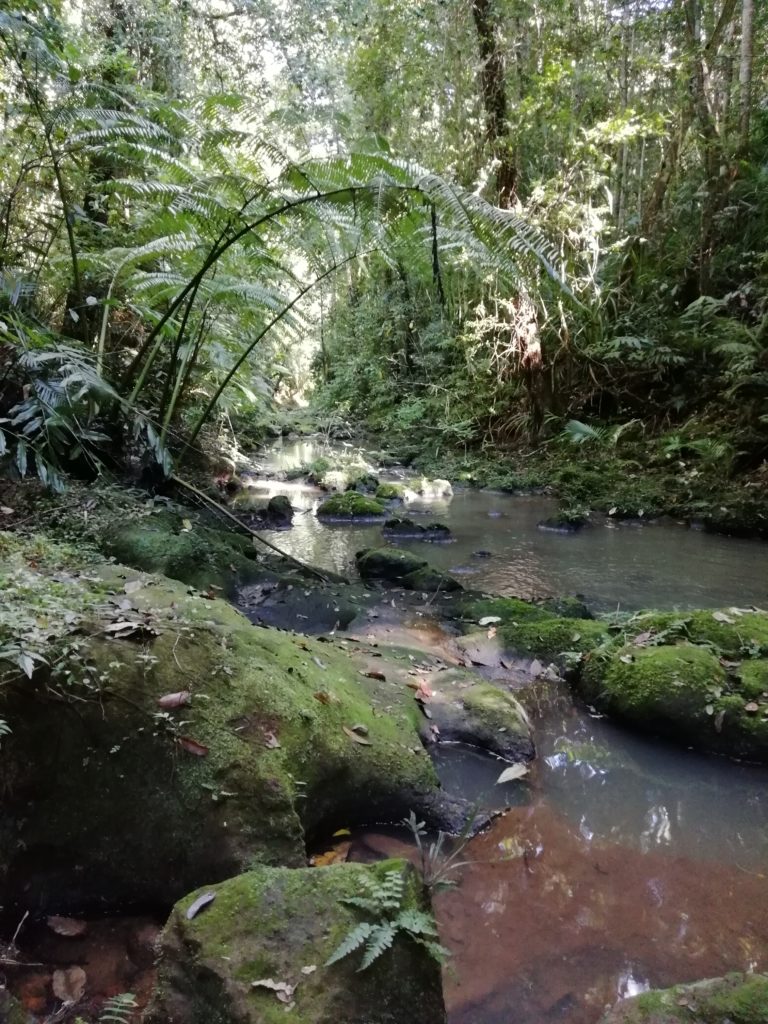
Yungaburra rainforest
Fate played me a fortunate hand again on my arrival, Yungaburra is known for its Platypus viewing station so I spent my first evening staring in awe at one of these bizzare little creatures as it fed along the towns riverside, I hadn’t even considered seeing a Platypus when booking the flight to Oz, this was a real bonus to my trip.
Curtain Fig Tree
The curtain Fig tree is a true marvel of nature.
This parasitic plant disperses seeds that find their way onto an upper branch of a host tree, here it sets down a root which travels down the hosts trunk to the ground. Over time, as the fig tree grows in size and weight it forces the host tree to topple and lean into adjoining trees. Setting down even more roots, the Fig Tree smothers its host tree which eventually dies and rots away leaving the Curtain Fig suspended on its enormous scaffold of roots. There is a fine example of a Curtain Fig Tree just outside the town.
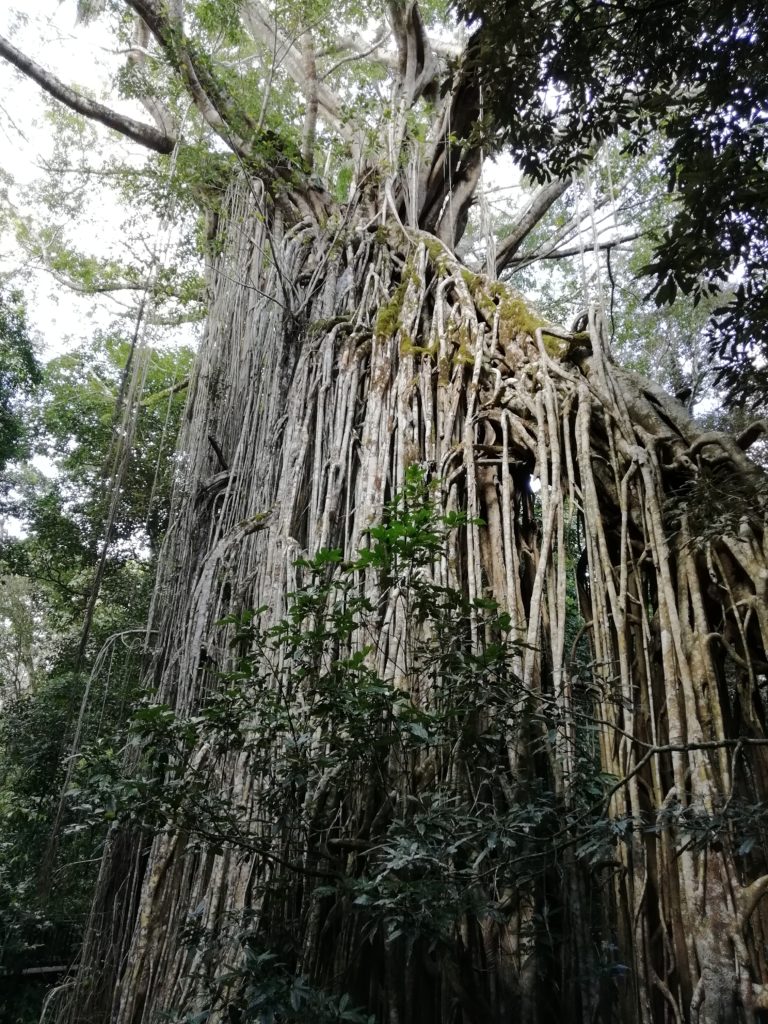
Curtain Fig tree – Yungaburra, Queensland
Hasties Swamp and Bromefield Swamp
These two excellent birdwatching sites are easy to do in one day and provided superb views of ducks, raptors and other species. Freckled Duck and Square Tailed Kite were highlights at Hasties Swamp. There is a car park at Hasties Swamp and good viewing hides, Bromefield Swamp has an open air viewing platform but a scope will be needed to pick out a lot of the birds. It should be noted that snakes seem to be common in the Bromefield area, a Coastal Taipan was seen at Bromefield Swamp and crows were seen feeding on the carcass of a Blue Bellied Black Snake on the road nearby.
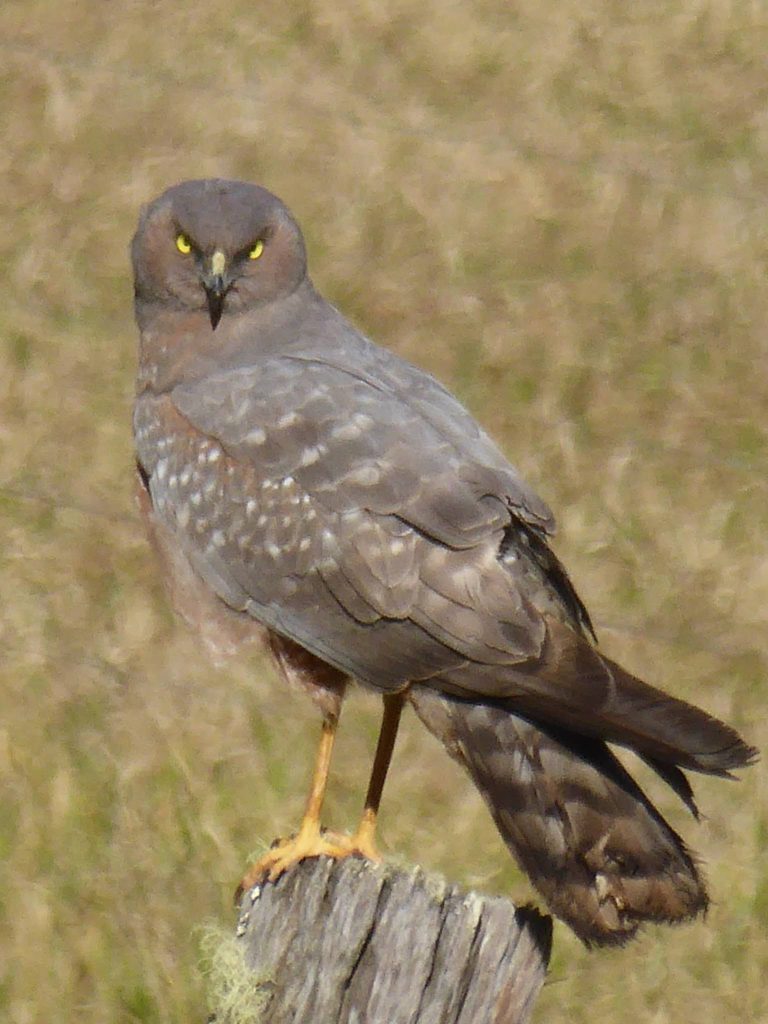
Spotted Harrier-Bromefield Swamp 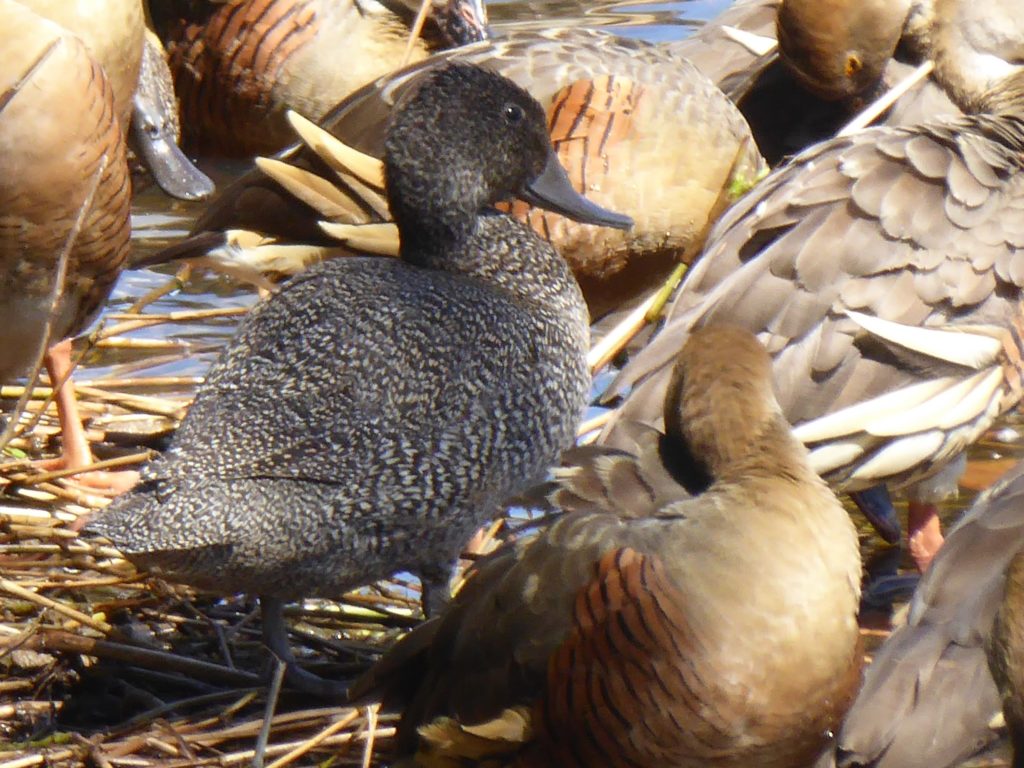
Freckled Duck-Hasties Swamp 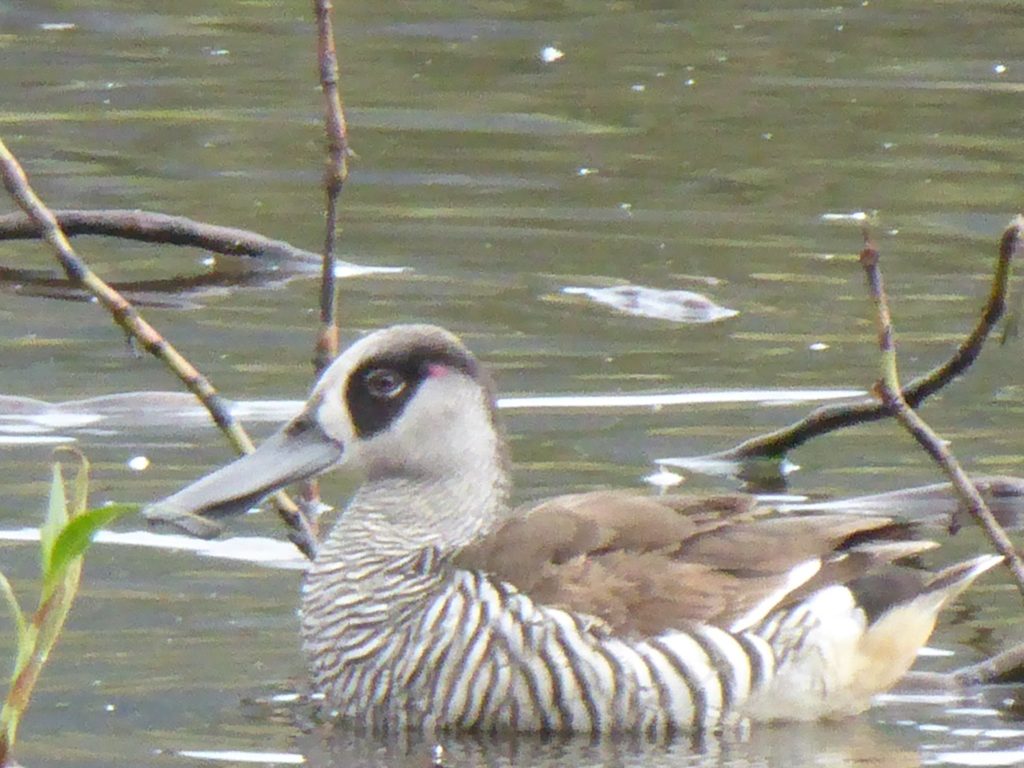
Pink eared duck-Hasties swamp 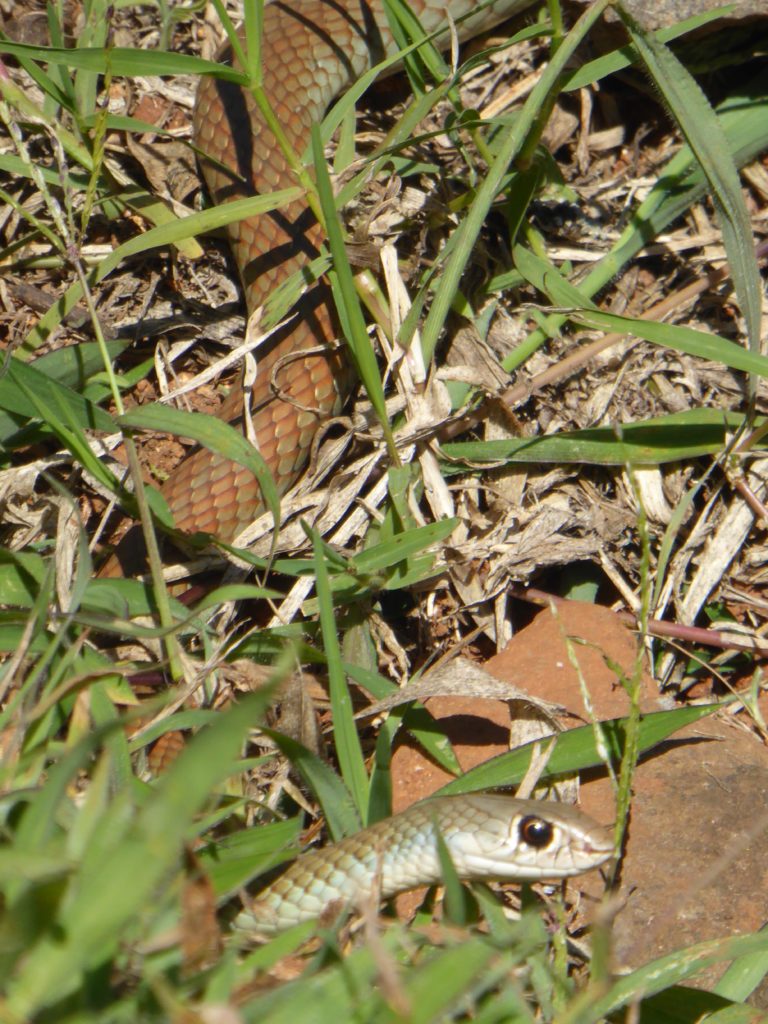
Coastal Taipan-Bromefield Swamp
Undarra
I was keen to venture beyond the Tablelands and enter the dryer zone beyond, the Hostel owner recommended a drive to Undarra.
There is an invisible line crossed where the landscape changes from lush green fields and woods to a dryer environment where the grass is brown and well spaced trees predominate the countryside seemingly stretching for miles in all directions, it really is hard to explain but driving along, their is an almost immediate change in scenery. The three hour drive to Undarra is along miles of straight, featureless roads, signs for the next turning occur nearly ten miles before the junction and there are few places to stop, although I did find a short walk on the way back, even here there were plaques explaining facts about the local fauna.
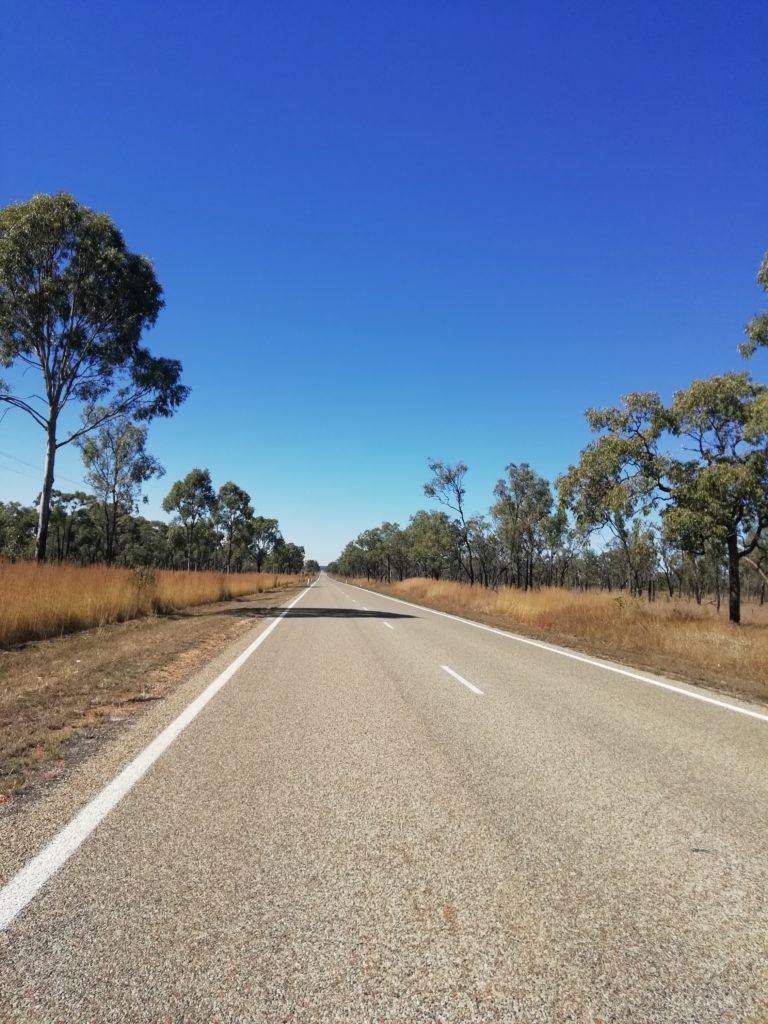
Few birds were seen on the drive to Undarra but Little Eagle were seen feeding on roadkill which was a bonus.
I enjoyed a few hours of birding at Undarra Holiday Park and have to say that it was an excellent place to visit, with its varied habitats ranging from parkland to Eucalypt and Coniferous woods a diverse range of species was found.
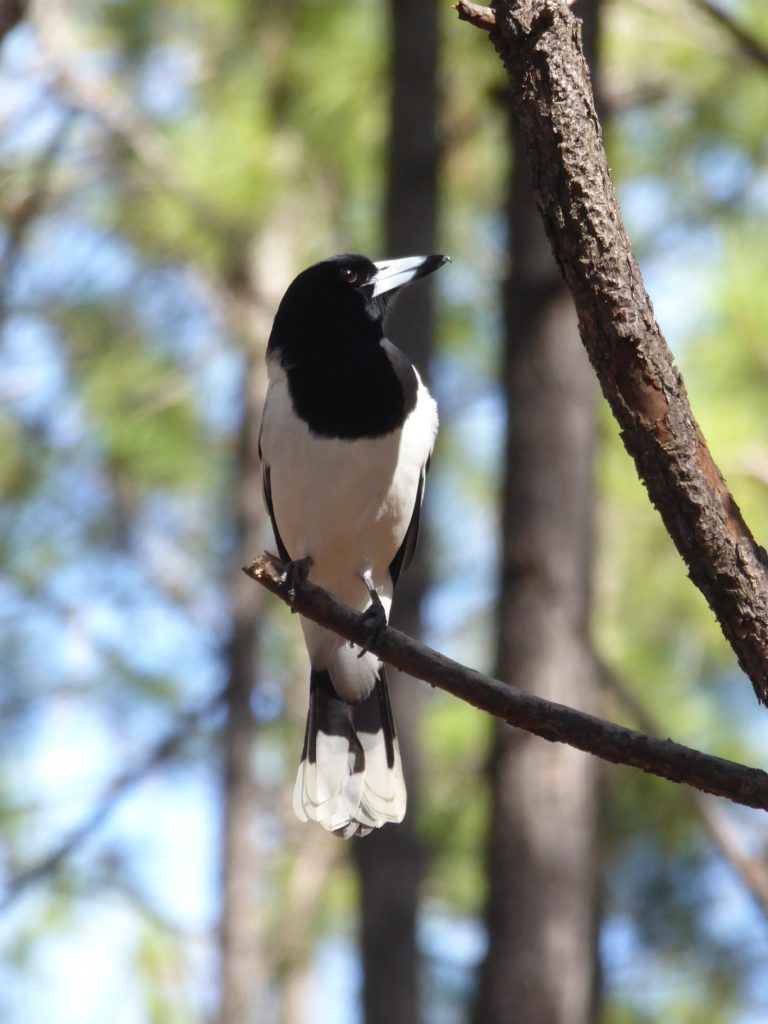
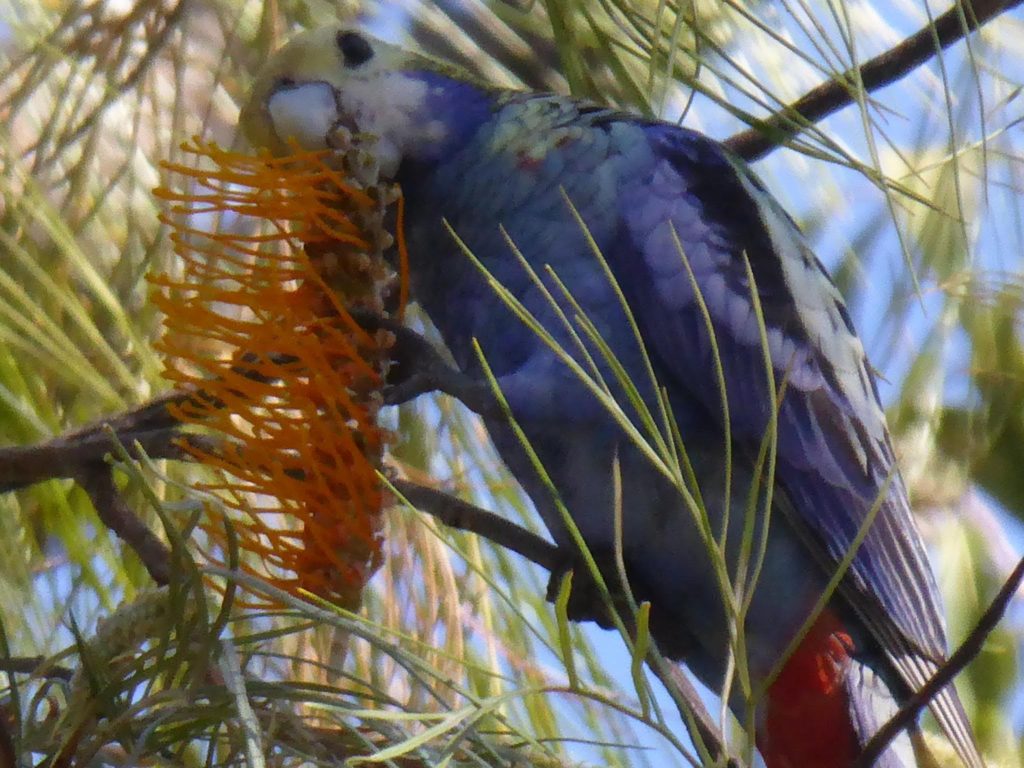
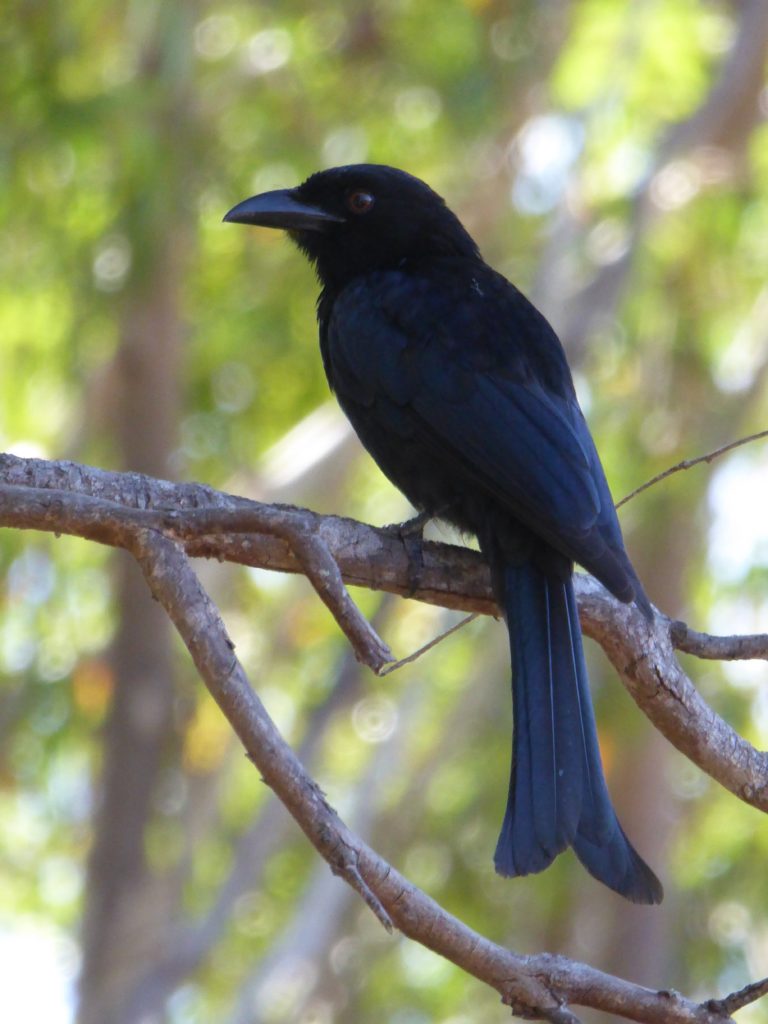
I took a slight detour to Millstream Falls on the way back. It was getting late and birds were scarce in the area but the waterfall is a magnificent sight.
Marreba, The Boulders National Park
The drive through Mareeba turned out to be interesting for birdlife with a very photogenic Blue-winged Kookaburra and a huge flock of Black Kite which were swarming over a recently ploughed field on the outskirts of the town, I also found a scattering of termite mounds in a dryer area towards the national park.
Most people visit The Boulders National Park to feed the wild Rock Wallabies which have become curiously tame, they were being a bit elusive on the day I went but it is a fascinating park to explore. There are numerous trails which take you out among the forest and up onto the boulders and rocky outcrops and the views from the higher elevations are amazing, the surrounding forest seems to be never ending.
There were plenty of Thornbills and Honeyeaters to be found and this was the only place where I managed to find Bronze-winged Pigeon, such a beautiful bird to observe and quite tame, Kookaburras were a menace in the restaurant area, swooping down on the tables to take food. It was also the only place where I managed to find Grey Kangaroo.
Back To Cairns
Yungaburra turned out to be another highlight of my short visit to Oz and I would highly recommend the area for anyone seeking interesting birds and wildlife.
On returning to Cairns I booked a diving trip to The Great Barrier Reef, many companies offer guided tours to the reef, most offering the same experience so do a little research and take your pick. Of course, the snorkling was a fascinating experience but I also spent a lot of time scanning the ocean for pelagic birds and wasn’t to be disappointed. Brown Boobies were common and a Masked Booby was observed near our dive site, a few Brown Noddy’s flew past the boat as did Black-naped Tern.
Cairns Mangrove Walk
The Airport is an easy walk from the Esplanade and if you provide enough time I would recommend spending half an hour trudging through the Mangrove Boardwalk which is at the entrance to the airport, this is an environment that would normally be inaccessible to humans and this small, free attraction offers a fascinating glimpse into life among the Mangroves.